Oversized Loads Require Proper Hauling Equipment
Trailer & Cargo Hauling in the Hampton Roads Area for transporting utility trailers, construction materials, and heavy equipment
Contractors acquire a loaded equipment trailer that exceeds their truck's towing capacity, homeowners purchase building materials too large for standard vehicles, or businesses need cargo moved between job sites without investing in dedicated hauling trucks. Prosperity Towing & Hauling Unlimited LLC handles trailer and cargo hauling in Norfolk when the load's size, weight, or configuration demands commercial-grade towing equipment and experienced operators who understand weight distribution, braking dynamics, and securement methods that prevent shifting during transport.
Utility trailer hauling involves hitching trailers to trucks rated for the combined weight, checking that safety chains cross beneath the tongue and electrical connections function for brake lights and turn signals. Cargo transport services move palletized materials, bundled lumber, or machinery secured with ratchet straps anchored to trailer tie-down points rather than merely draped over the load. Construction material hauling accounts for uneven weight distribution when panels, pipes, or aggregates sit heavier on one side, requiring load adjustment before departure to prevent trailer sway at highway speeds.
Request a hauling estimate by describing the trailer dimensions, cargo weight, and pickup and delivery locations for proper equipment assignment.
How Secure Load Transportation Works
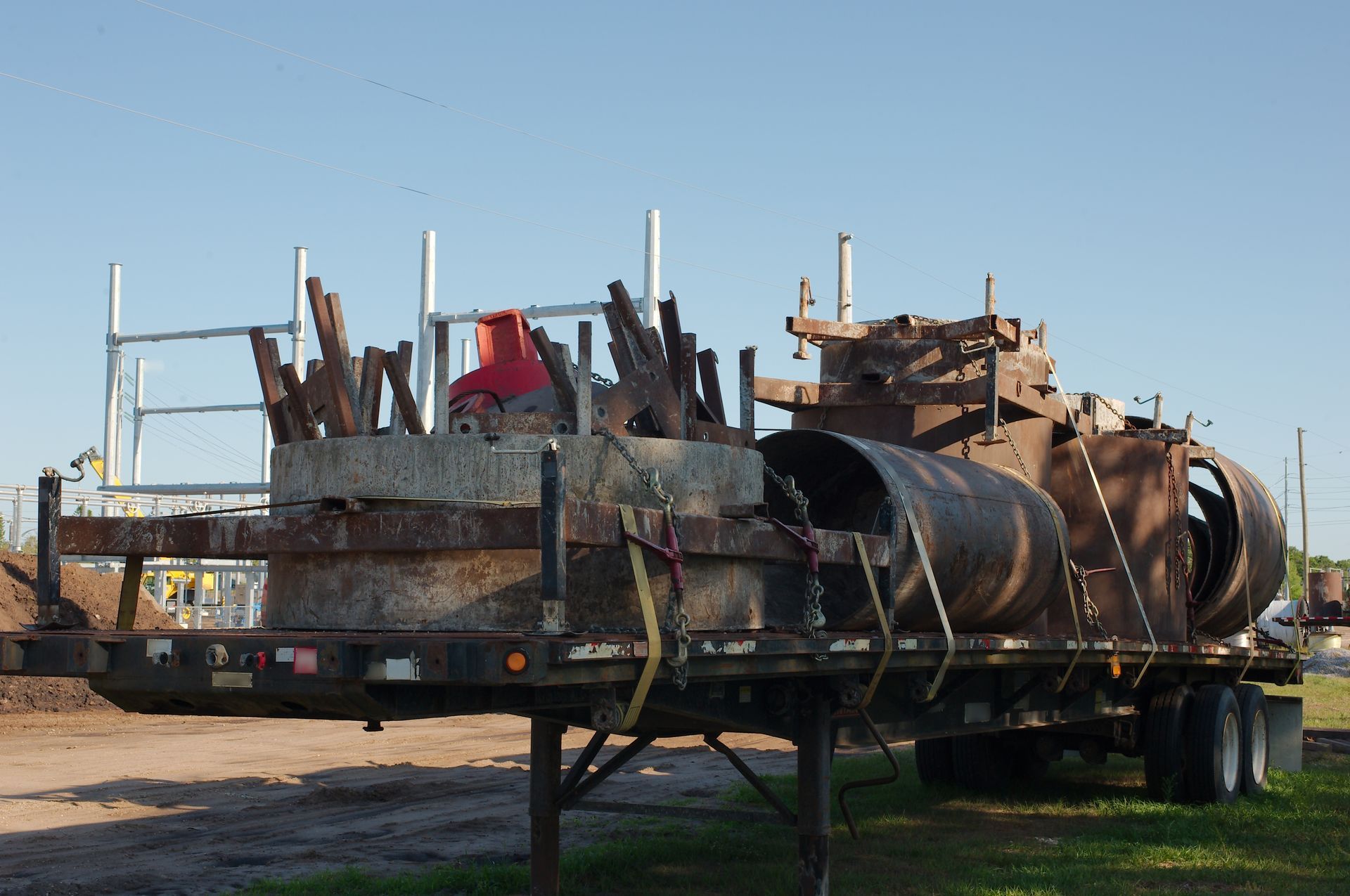
The operator inspects the trailer's tires, lights, and hitch coupler before connecting it to the towing vehicle, then verifies that the load sits within the trailer's rated capacity and doesn't exceed height or width limits for public roads. Securing involves positioning straps or chains over the cargo at angles that resist forward, rearward, and lateral movement, tightening them until slack disappears but not so much that fragile materials crack or compress. Equipment trailer moving requires blocking wheels with chocks and using multiple tie-down points to prevent rolling or tipping when the trailer accelerates, brakes, or turns.
When the cargo reaches its destination, you see materials arrive in the same configuration as when loaded, without shifting, tipping, or damage from inadequate securement. Straps remain tight, nothing protrudes beyond the trailer's edges, and unloading proceeds in the planned sequence because items didn't rearrange during transport. If the trailer carried liquids or loose aggregates, proper weight distribution prevented the load from sloshing or sliding toward one side and destabilizing the towing vehicle.
Commercial hauling solutions accommodate recurring transport needs for businesses that move inventory, tools, or materials regularly but lack the fleet capacity to handle every load internally. Some cargo requires tarps to protect against weather or contain dust, while oversized loads may need escort vehicles or permits depending on dimensions and route. Operators follow Department of Transportation securement standards that specify strap ratings, tie-down spacing, and maximum overhang limits to keep loads stable and legal during transit.
Common Questions About This Service
Trailer and cargo hauling in Norfolk involves questions about load limits, securement methods, and what happens if the cargo shifts during transport.
What determines whether a load can be hauled safely?
The operator calculates gross trailer weight, confirms the towing vehicle's capacity exceeds that figure by a safe margin, and checks that the trailer's axles and tires are rated for the load, since exceeding any of these limits risks equipment failure or loss of control.
How do securement requirements vary by cargo type?
Rigid items like steel beams require fewer tie-downs than loose materials that can shift, liquids need baffled tanks or weight-distributed containers to prevent sloshing, and fragile cargo demands cushioning and strap tension that resists movement without crushing contents.
Can cargo be hauled if the trailer has damage?
Trailers with cracked frames, worn tires, or non-functioning lights must be repaired before hauling because structural failure or visibility issues during transport create liability and safety risks that professional operators won't assume.
What happens if delivery access is blocked?
The operator contacts the customer to confirm alternative unloading locations or delays delivery until the access route clears, since attempting to navigate narrow or obstructed paths with a loaded trailer often results in property damage or stuck equipment.
How does weather affect hauling schedules?
Rain reduces traction and increases braking distances for heavy loads, high winds destabilize trailers with large surface areas or tall cargo, and ice makes hauling on anything but fully treated roads unsafe, so severe weather triggers delays until conditions improve.
Prosperity Towing & Hauling Unlimited LLC uses towing equipment matched to the load's weight and dimensions, applies securement methods that meet federal standards, and inspects both the trailer and cargo before departure. Call with details about what needs hauling, including weight estimates and photos of the load, to confirm availability and schedule transport.