Vehicles Stuck Off-Road Need Specialized Extraction
Vehicle Recovery Services in the Hampton Roads Area for cars and trucks trapped in ditches, mud, or sand
A vehicle slides off the shoulder into a drainage ditch during heavy rain, sinks axle-deep into soft sand at a construction site, or tips partially after leaving the pavement on an embankment. Prosperity Towing & Hauling Unlimited LLC provides vehicle recovery in Norfolk when standard driving can't free the vehicle and attempting to power out risks further damage to the drivetrain, suspension, or undercarriage. Recovery work uses winches, rigging, and controlled pulling angles to extract vehicles from positions where wheels have lost traction or the frame rests on obstacles.
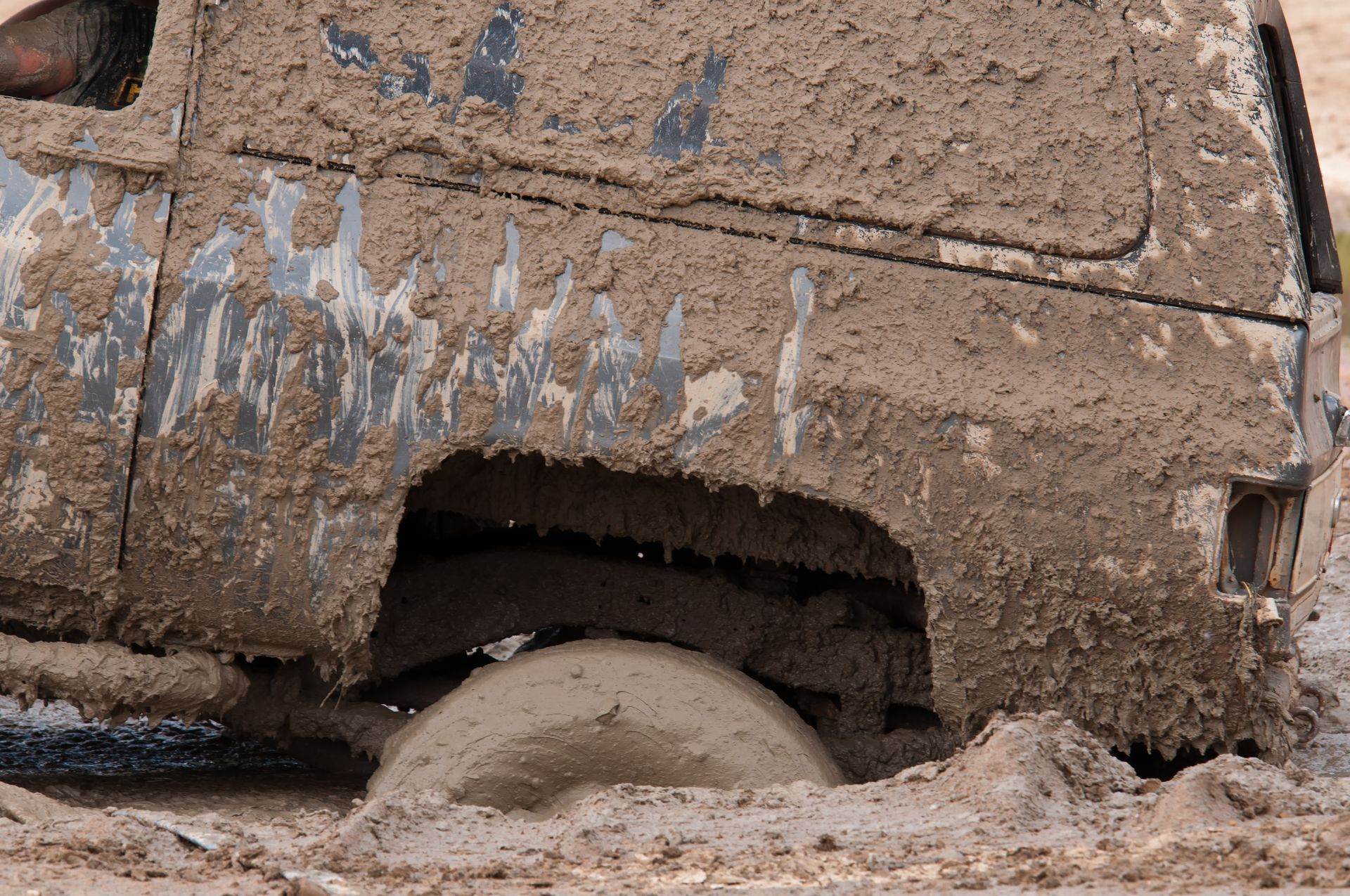
Winch-out services attach steel cable to designated recovery points on the vehicle's frame, not bumpers or body panels, and apply steady tension at angles calculated to avoid rolling or twisting the vehicle during extraction. Ditch recovery involves stabilizing the vehicle to prevent further sliding, clearing obstacles from the pull path, and lifting or dragging the vehicle back onto level ground. Mud and sand recovery requires spreading the pull force across multiple contact points to prevent cable snap and sometimes uses ground mats or boards to create traction under the recovery vehicle's own wheels.
Schedule an on-site assessment when the vehicle's position makes self-recovery dangerous or impossible.
Why Recovery Requires More Than Towing Equipment
Recovery differs from standard towing because the vehicle isn't on a road or parking surface where wheel dollies and flatbeds operate. The operator surveys the scene to identify underground utilities, overhead lines, ground stability, and the safest extraction path before attaching any rigging. Accident scene recovery often involves coordinating with emergency responders, documenting vehicle position for investigators, and working around debris fields or fluid spills that affect equipment placement.
Once recovery finishes, you see the vehicle returned to a flat, stable surface where tires contact solid ground and the frame no longer rests on earth or obstacles. The steering responds when you turn the wheel, and there's no grinding or binding from suspension components forced into unnatural angles. If the recovery involved pulling from soft ground, mud and debris are cleared from wheel wells and undercarriage components to prevent imbalance or blockage once the vehicle moves under its own power.
Off-road vehicle extraction applies to recreational vehicles that leave trails and become high-centered on rocks or logs, as well as work trucks that sink into unpaved job sites after storms saturate the soil. The recovery method depends on whether the vehicle tipped, how deeply it sank, and what anchors are available for the winch cable. Some recoveries require multiple pulls from different angles or sequential lifting before the vehicle reaches drivable ground.
What Property Owners Usually Ask
Recovery situations in Norfolk raise questions about safety, equipment capabilities, and what happens after the vehicle is freed.
What determines whether a vehicle can be recovered safely?
The operator evaluates ground stability under the recovery truck, the angle and depth of the stuck vehicle, cable reach from available anchor points, and whether pulling forces might cause the vehicle to roll or slide unpredictably during extraction.
How does winch capacity affect recovery success?
Winches are rated by pulling force, typically between 8,000 and 20,000 pounds, and the operator calculates whether the rated capacity exceeds the force needed to overcome mud suction, incline resistance, and the vehicle's weight when selecting attachment points and rigging configurations.
Can recovery damage the vehicle further?
Proper rigging attaches cables to frame-mounted recovery points designed to handle pulling forces, while attaching to bumpers, axles, or suspension components risks bending or tearing those parts, so pre-recovery inspection identifies safe attachment locations.
What happens if the vehicle won't start after recovery?
The operator checks for flood damage if water entered the engine bay, inspects for undercarriage damage from impacts during the incident, and determines whether the vehicle can be driven to a repair shop or needs flatbed towing to avoid worsening hidden damage.
When should recovery wait for additional equipment?
Complex recoveries involving overturned vehicles, steep embankments, or positions near water or traffic require additional trucks, extended rigging, or traffic control, and attempting the work with insufficient equipment increases risk to both the vehicle and recovery crew.
Prosperity Towing & Hauling Unlimited LLC uses rigging rated for the forces involved and follows procedures that protect both the stuck vehicle and surrounding property during extraction. Contact dispatch with photos of the vehicle's position and surrounding terrain to confirm equipment requirements before the crew arrives.